Capturing Bigfoot: What About the Musculature, the Footprints, and the Evidence They Left Behind?
Examining the new documentary, the alleged test footage, Jeff Meldrum's research, the conflicting confessions, and the questions that still deserve answers
The new documentary Capturing Bigfoot has reopened one of cryptozoology's oldest controversies: Was the famous 1967 Patterson-Gimlin film really footage of an unknown primate, or was it simply a man wearing a costume?
The documentary presents alleged confessions, family testimony, and previously unseen footage that its filmmakers believe establishes that the original film was a hoax.
That's certainly a case worth examining. But there's another question worth asking:
Are we examining all the evidence, or only the evidence that supports the documentary's conclusion?
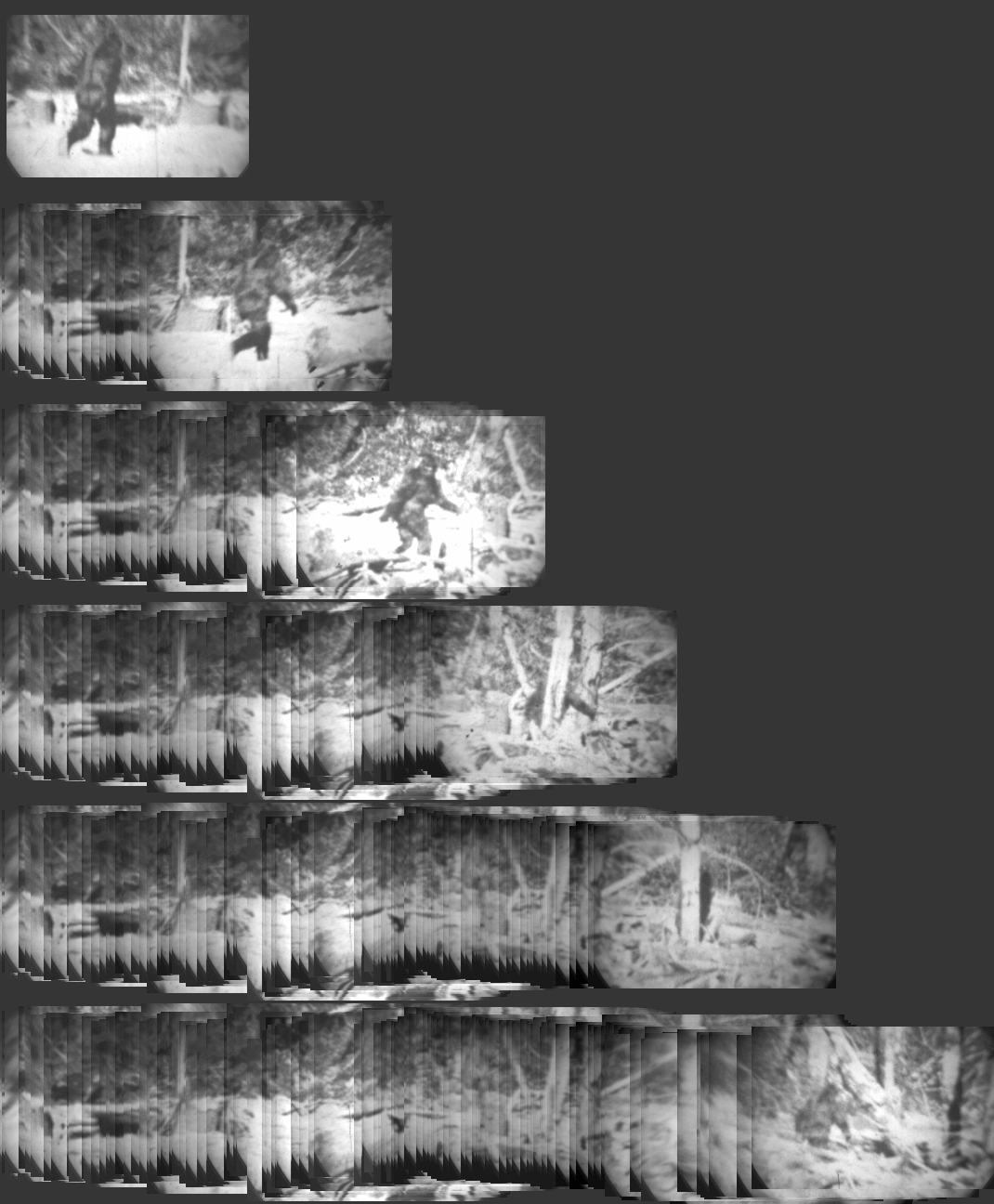
I recently received a copy of Bigfoot Times, and one of the images featured on its cover caught my attention. It presents what appears to be a side-by-side comparison between the famous Patterson-Gimlin subject, Patty, and an alleged costume or recreation.
At first glance, the resemblance is striking. I won't deny that.
However, resemblance alone doesn't establish that the two figures are the same thing.
Looking more closely, I noticed what appeared to be a difference in anatomical definition, particularly around the musculature and contours of the body.
I contacted Daniel, who publishes Bigfoot Times, and asked him directly whether the figure on the left was Patty and whether he also saw more musculature in that figure.
Daniel agreed on both points: the figure on the left was Patty, and it displayed more apparent musculature than the figure on the right.
That caught my attention because this isn't simply a question of which figure looks more like a Bigfoot. It's a question of whether the anatomical details visible in the original footage can be reproduced by a costume.
The orientation of the figures in the lower comparison is a separate detail that deserves care when interpreting the photograph. We shouldn't assume that the left-right arrangement is identical in every part of the comparison.
We also need to establish the origin and date of the right-hand image before treating it as evidence of the costume allegedly used in 1967.
After all, a recreation made years later would be a very different thing from an independently documented photograph of the original costume.
The alleged recreation actually looks quite convincing. It has a recognizable Bigfoot appearance and a convincing overall silhouette. But looking convincing is not the same as reproducing all the anatomical characteristics visible in the original footage.
That's an important distinction.
Jeff Meldrum and the Anatomy Question
This comparison brings to mind research conducted by Dr. Jeff Meldrum and special-effects artist Bill Munns.
Their 2013 research paper, Surface Anatomy and Subcutaneous Adipose Tissue Features in the Analysis of the Patterson-Gimlin Film Hominid, examined an important aspect of the controversy.
The question wasn't simply whether the subject looked muscular.
It was whether the visible anatomical features could reasonably be explained by human anatomy and the distribution of subcutaneous fat, or whether they were better explained by a fabricated costume.
Munns and Meldrum examined photographs of human subjects, human anatomical references, great apes, and costume constructions. They investigated such features as skin folds, underlying fatty tissue, and the way surface anatomy creates contours.
This is relevant to the comparison because what we see on the surface of a body is not necessarily a simple outline of the muscles underneath it. Muscle groups, fat deposits, skin, and the way those structures move together all contribute to the visible shape of the body.
A muscular-looking contour can be produced by several interacting anatomical structures. Conversely, a costume must reproduce the appearance of those structures convincingly, including how the contours change with movement.
That makes the back, shoulders, hips, and gluteal region particularly interesting areas to examine in the Patterson-Gimlin footage.
The apparent definition in Patty's back and gluteal region is not merely a question of whether the figure has a large or imposing silhouette. It's about the shape and separation of the contours, and how they appear in relation to the movement of the body.
This is where the comparison with the alleged recreation becomes interesting. The second figure looks surprisingly good, but the original subject appears to display more pronounced anatomical definition.
That observation doesn't establish what the underlying structures actually are. We are examining film images, not dissecting a specimen. Lighting, fur, movement, camera quality, and the limitations of the footage all matter.
But it is precisely the sort of question that anatomical research can help us investigate.
Munns and Meldrum argued that many features critics had attributed to costume flaws could also be explained by real biological anatomy. Their analysis presented a substantive argument that the film subject's surface characteristics were consistent with an unknown primate.
That is not proof that Patty was a genuine animal. But it is a substantive anatomical argument that deserves consideration.
And it raises a challenge for the hoax explanation: a proposed costume should be evaluated against the actual anatomical appearance of Patty, not merely against the general outline of a large, hairy figure.
Original research:
How Tall Was Patty? The Problem With the Suit Performer
Another important question in evaluating the Patterson-Gimlin film is the apparent height of the subject.
This isn't simply a matter of looking at the footage and guessing. Researchers have spent considerable time examining the original filming location, identifying landmarks, reconstructing the camera position, and comparing measurements from the film with known objects and people.
Several researchers have arrived at estimates placing Patty at approximately seven feet or taller.
For example, forensic examiner Jeff Glickman's photographic analysis produced an estimate of approximately 7 feet 3.5 inches.
His approach involved photographic registration: comparing the film subject with a person of known height in photographs of the same location, using a dead tree visible in both images to establish a common scale.
This is particularly interesting because the method did not depend on first assuming a particular distance between Patterson's camera and the subject.
Christopher Murphy subsequently examined the height question in his research, including the difficulties involved in determining the camera-to-subject distance.
In Considering the Math — Patty's Height, Murphy discusses Glickman's 87.5-inch walking-height estimate and examines whether the filming location could accommodate the camera distance necessary to support it.
Murphy argues that the available space at Bluff Creek makes a camera-to-subject distance of approximately 151.4 feet plausible, supporting the 87.5-inch calculation.
That's approximately 7 feet 3.5 inches while walking.
Daniel Perez, publisher of Bigfoot Times, has also emphasized the importance of the seven-foot-plus estimates.
A 2024 Boston College article discussing the Bluff Creek Project quotes Perez explaining why the distinction matters: if Patty were six feet tall, the possibility of a man in a costume would be considerably easier to entertain. If the subject were approximately seven feet three inches, the human-performer explanation becomes much more challenging.
These estimates are not universally accepted. The original film does not contain a measuring device, and calculations depend on assumptions about camera geometry, perspective, film characteristics, and the reconstruction of the original landscape.
There are also researchers who have proposed different calculations, including estimates involving a standing height greater than the measured walking height. We shouldn't confuse those different measurements or imply that every researcher has arrived at precisely the same number.
Nevertheless, the seven-foot-plus estimates have substantial research behind them and deserve to be considered.
Now consider Bob Heironimus, the best-known person to claim that he wore the costume.
He has described himself as a little over six feet tall and weighing approximately 190 pounds at the time of the filming.
That raises an obvious question.
If the figure in the film was approximately seven feet or taller, how was a man of Heironimus's reported height able to produce that appearance?
A costume can add apparent height, of course. But that explanation introduces additional questions about the construction of the footwear, the proportions of the legs, the body shape, and the overall anatomy.
And this isn't an isolated question. The height issue needs to be considered alongside the unusually long arms, relatively short legs, head-to-body proportions, musculature, and walking mechanics discussed in the anatomical research.
The point isn't that a height estimate alone proves Patty was an unknown primate.
It's that the people proposing a human performer need to explain the physical dimensions of the figure, not merely identify someone who claims to have worn a suit.
Further research:
Christopher Murphy — Considering the Math: Patty's Height
Jeff Glickman's photographic height analysis, discussed in The Patterson-Gimlin Film: An Analysis
Tracking Bigfoot — Boston College Magazine (2024), including Daniel Perez's comments
The Footprints: An Important Part of the Story
Perhaps even more interesting is the footprint evidence associated with the original encounter.
This is where Meldrum's work becomes particularly relevant.
In his 2004 paper, Midfoot Flexibility, Fossil Footprints, and Sasquatch Steps: New Perspectives on the Evolution of Bipedalism, Meldrum examined the biomechanics of alleged Sasquatch footprints.
One of the most interesting features he investigated was something called the midtarsal break.
Human feet generally have a relatively rigid longitudinal arch. Great apes, including chimpanzees, have considerably more flexibility through the middle of the foot.
Meldrum argued that certain Sasquatch footprints displayed evidence of this flexibility.
A particularly interesting feature was a pressure ridge across the midfoot.
He examined photographs taken by U.S. Forest Service timber cruiser Lyle Laverty at the Bluff Creek location, along with footprint casts made during the original investigation.
He also compared the apparent mechanics of the foot in the Patterson-Gimlin footage with the features visible in the footprints.
Meldrum identified what he interpreted as a correspondence between the midfoot flexibility visible in the walking sequence and the pressure ridges found in the associated footprints.
In other words, he wasn't simply arguing that the footprints were unusually large.
He was proposing that they displayed anatomical and biomechanical characteristics consistent with a flexible, ape-like foot.
The documentation is particularly interesting because it involves more than one footprint.
Patterson made initial casts on October 20, 1967. Additional footprints were photographed, and Bob Titmus subsequently made ten casts of sequential tracks at the location.
This provides a much broader body of material to examine than a single isolated impression.
Original research:
Meldrum also published Ichnotaxonomy of Giant Hominoid Tracks in North America (2007), in which he proposed a formal classification for the distinctive North American giant hominoid track type.
These publications are worth examining because they address the physical characteristics of the tracks rather than relying exclusively on eyewitness accounts.
The footprints are particularly important when considering the documentary's argument. If the film was fabricated, what happened to the tracks? Were they fabricated too? If so, how? And what evidence supports that explanation?
Those are questions that deserve answers rather than silence.
The Alleged Test Footage: What Exactly Are We Looking At?
One argument being made in defense of the new documentary is that the newly surfaced footage shows a person in a Bigfoot costume, apparently rehearsing the famous walk.
But let's consider another possibility.
Bigfoot documentaries have been using actors, costumes, and recreations for decades. When a production wants to illustrate an encounter, demonstrate a theory, or show viewers what a reported creature might look like, it often uses somebody in a suit.
Consider television productions such as MonsterQuest. Reenactments are a familiar part of paranormal and cryptozoological programming.
There is nothing inherently suspicious about filming somebody in a Bigfoot costume.
In fact, there are several entirely reasonable possibilities for footage like this:
- It could be test footage for a television or documentary production.
- It could be an attempt to recreate the famous Patterson-Gimlin encounter after the original event.
- It could be a demonstration of a costume or a walking technique.
- It could be footage of an earlier attempt to create the original hoax.
The fourth possibility is certainly worth investigating. But the first three shouldn't be dismissed without examination.
The important question is whether the footage can be independently dated and connected to the original 1967 production.
A particularly interesting contribution to this discussion comes from Bill Munns, who has spent decades studying the Patterson-Gimlin film and practical special effects.
In a March 2026 interview with Sasquatch Odyssey, Munns discussed the newly surfaced footage and its physical characteristics.
His assessment was that the disputed clip was more likely an after-the-fact replica than a genuine pre-Patterson-Gimlin rehearsal.
He also made an important distinction concerning the film stock: a manufacture date code from 1966 does not establish the date on which the footage was actually filmed.
That distinction matters enormously.
A film stock manufactured in 1966 could theoretically have been used later. The date of manufacture and the date of exposure are two different questions.
Munns also discussed visual differences, including the appearance of the feet, that he believes deserve closer examination.
This doesn't establish that his interpretation is correct. But it demonstrates that even someone with extensive technical experience examining the original footage sees legitimate questions about the newly surfaced material.
Further listening:
Bill Munns discusses the alleged test footage and Capturing Bigfoot — Sasquatch Odyssey (March 2026)
Another discussion worth reading:
The Crypto Crew: Does the Alleged Test Footage Really Expose the Patterson-Gimlin Film as a Hoax?
The author examines the circulated images and questions whether their similarities and differences actually establish the documentary's conclusions.
There is also a useful discussion of the technical difficulties involved in reproducing the original footage in Skeptical Inquirer:
That article takes a skeptical position toward the Patterson-Gimlin film, but it also illustrates why costume recreations and comparisons need to be carefully controlled. A poor recreation doesn't prove the original is genuine, and a similar-looking recreation doesn't automatically prove the original was fabricated.
A Surprisingly Convincing Recreation — But Is It Patty?
The comparison published in Bigfoot Times raises another interesting question.
The alleged test footage does show a surprisingly convincing figure. It is not unreasonable to look at it and recognize a resemblance to Patty.
But there are differences worth examining.
As Daniel and I discussed, the figure identified as Patty in the comparison appears to display more pronounced musculature than the figure beside it.
In particular, the original Patterson-Gimlin subject appears to display considerable anatomical definition around the gluteal region and back. These are among the kinds of details that make the Munns and Meldrum research relevant.
The point isn't that the alleged recreation looks bad. It actually looks quite good.
But looking similar in silhouette is not necessarily the same as reproducing the underlying anatomy.
The comparison also gives us an opportunity to ask a more specific question: can the apparent anatomical contours of Patty be reproduced by a costume, and can that costume reproduce them consistently as the subject moves?
A static photograph is useful, but movement matters. The way the contours shift during walking, the way the back and hips move in relation to one another, and the way the body maintains its proportions are all part of the larger anatomical question.
This is why the original footage should be examined frame by frame, with careful comparisons against proposed recreations.
If this really was a costume made during the 1960s, it could represent an impressive piece of practical effects work. That raises its own questions.
Who constructed it? What materials were used? How was the anatomy achieved? Are there photographs, workshop records, receipts, or independent witnesses who can establish its history?
The late 1960s were an important period in Hollywood special effects. Planet of the Apes was being made around the same time, and its production involved remarkable advances in practical makeup and prosthetic effects.
We shouldn't assume that the alleged costume was a Hollywood production, but the technical question remains fascinating.
If the disputed footage shows a convincing full-body recreation from that period, it deserves examination as a possible piece of special-effects history in its own right.
And there's another question: why has nobody produced a truly convincing, controlled recreation of Patty's appearance using comparable period materials and techniques?
There have certainly been attempts to reproduce the film, including the National Geographic recreation. But the results have not necessarily reproduced the original subject's appearance.
A failed recreation doesn't prove Patty was real. It does, however, demonstrate that the challenge is more complicated than simply putting somebody in a gorilla suit.
The National Geographic Recreation and the Costume Question
The difficulty of reproducing Patty's appearance deserves more attention.
One particularly interesting example is the National Geographic recreation involving a costume associated with Philip Morris, who claimed to have supplied the original suit.
The recreation did not convincingly reproduce the appearance of the Patterson-Gimlin subject.
This raises a reasonable question: if the original figure was simply a person in a costume, why has it been so difficult to reproduce the same appearance?
We should be fair. A failed recreation doesn't establish that the original was genuine. Different materials, performers, camera equipment, lighting, and production methods can produce different results.
But the question remains.
A convincing explanation of the Patterson-Gimlin film should account for the actual appearance of the figure, not merely demonstrate that a person can walk around in a Bigfoot costume.
And this brings us back to the alleged suit itself.
According to accounts presented in the new documentary, the costume was eventually burned after Roger Patterson's death.
That's extraordinary if true.
A costume allegedly responsible for one of the most famous pieces of footage in history would be an immensely valuable historical artifact today.
Why destroy it?
Perhaps someone wanted to eliminate evidence. Perhaps the costume was regarded as an ordinary prop and nobody anticipated its future historical value. Perhaps the story about its destruction is incomplete.
We don't know.
But if the suit existed, its construction, photographs, provenance, and destruction deserve careful investigation.
The alleged rehearsal footage survives, but the costume reportedly does not. Those are two separate pieces of evidence, and they shouldn't be confused.
The Many Men Who Claimed to Be Patty
There's another issue that deserves considerably more attention: the number of people who have claimed to be the man inside the Patterson-Gimlin costume.
Daniel Perez has discussed the historical list compiled by the late René Dahinden, who kept track of people claiming to have been the performer.
This is an important point.
There have been multiple claims of responsibility for the same alleged performance. They cannot all be telling the truth.
If several people claim to have worn the same costume during the same event, at least some of those claims must be false, mistaken, exaggerated, or based on a different understanding of what role they supposedly played.
That doesn't establish that Patty was genuine.
But it does raise a serious question about the credibility of the confessions themselves.
Who actually claims to have worn the suit? Who claims to have made it? Who says they witnessed its construction? Are these people describing the same costume, the same event, and the same circumstances?
Their accounts need to be compared rather than simply grouped together as a collection of confessions.
Bob Heironimus is the best-known performer claimant. Philip Morris has claimed involvement in supplying a costume. Other accounts have involved different people and different versions of the story.
The John Chambers connection is another interesting part of this history.
Chambers was famous for his special-effects and makeup work, particularly his contribution to Planet of the Apes. Rumors circulated that he had been responsible for the Patterson-Gimlin costume.
However, Chambers denied having anything to do with it when questioned by Roger Patterson and Francis Guenette in their 1975 book The Mysterious Monsters. Bobby Short later visited Chambers and reported that he maintained the same denial.
Again, this doesn't prove anything by itself. But it demonstrates that the history of alleged involvement is much more complicated than a single confession.
Credibility matters.
When a controversy depends heavily on personal testimony, the reliability of the people making those claims is central to the investigation.
A confession should not automatically be accepted simply because someone says they were involved.
It needs corroboration.
It needs to fit the physical evidence.
And it needs to be consistent with the accounts of other people who claim to have been involved.
If multiple people are willing to claim responsibility for the same alleged hoax, we have every reason to examine those claims carefully.
Bob Gimlin: Testimony Matters in Both Directions
Another important consideration is the testimony of Bob Gimlin himself.
The documentary relies heavily on testimony from people who now claim the film was fabricated.
Those statements deserve examination. But Gimlin's testimony deserves examination too.
He was there.
He has consistently maintained that what he witnessed was not a person wearing a costume.
In a 2014 interview, Gimlin was asked whether he had ever doubted that Patty was anything other than real.
His answer was:
"Never have."
He continued by explaining that, having been present and watched the event, he knew in his own mind that it couldn't have been a man in a suit.
That's important testimony.
Of course, eyewitness testimony isn't infallible. Memory can be imperfect, and people can disagree about what they experienced.
But if we're going to use testimony to establish that the film was a hoax, we cannot simply discard the testimony of the other person who was actually present.
We should also consider the possibility that Gimlin was genuinely convinced of what he saw, even if someone eventually establishes that he was mistaken or deceived.
That is a different proposition from accusing him of participating in a hoax.
Bob Gimlin interview:
The Bigfoot Forums — Bob Gimlin Interview
Credibility, Conflicting Accounts, and the People Behind the Documentary
Daniel from Bigfoot Times also describes an exchange that raises another question about credibility.
According to Daniel, after attending the screening, he contacted his colleague David Murphy at 5:02 the following morning to discuss something Clint Patterson had said.
Daniel reports that, based on their shared background concerning the particular matter, the two agreed that Clint's statement was fabricated and false.
Daniel doesn't identify the statement in the passage, so we cannot independently evaluate the allegation or determine exactly what was said.
Nevertheless, it raises a legitimate question.
When someone makes claims central to a documentary's conclusions, shouldn't their credibility be examined alongside their testimony?
If a person has allegedly fabricated one account, that doesn't automatically make every subsequent statement false. But it certainly gives us reason to scrutinize those statements more carefully.
And this standard must apply equally to everybody involved.
The people claiming to have worn the suit need to be examined. The people defending the film need to be examined. The people presenting the new documentary's claims need to be examined.
Credibility isn't a side issue in this controversy.
It's central to the investigation.
Emotional Motivations and Financial Incentives
Daniel also raises an important criticism of the documentary's emotional presentation.
As he puts it:
"Did I mention that Capturing Bigfoot didn't dare discuss the footprints associated with the P-G film? By dismissing this type of evidence and focusing simply on confessional evidence and getting the audience emotionally involved, you can sell your case quite easily using a time-tested technique: omission."
I think there's an important point here.
The documentary's argument about the film, the alleged costume, and the testimony of people associated with Roger Patterson deserves examination.
But what about the footprints?
If we're investigating whether the Patterson-Gimlin encounter was fabricated, shouldn't the physical evidence associated with that encounter be part of the discussion?
A confession, even a detailed one, is evidence that deserves investigation. So are photographs, physical casts, anatomical comparisons, and competing eyewitness accounts.
None should automatically take precedence simply because it supports the conclusion someone wants to reach.
There's also another side to the emotional argument.
If we are going to consider whether believers have become emotionally invested in the Patterson-Gimlin story, we should also consider the emotional motivations of people seeking to discredit it.
Family estrangement, personal grievances, damaged relationships, and the desire to tell a family story can all influence how people approach a subject.
That doesn't mean anyone is lying. But emotional motivations shouldn't be treated as something that exists exclusively on one side of the controversy.
The same applies to money.
The documentary discusses the history of Roger Patterson's earnings from the film. According to Clint's account in the documentary, Patterson and his business associate Al DeAtley initially made substantial money from theatrical showings. After their falling-out, Patterson's widow reportedly made a living licensing the footage to television productions.
That history is worth examining.
If the original footage became less commercially lucrative over time, a new documentary built around previously unseen footage and a dramatic family revelation could create a new commercial opportunity.
That is a legitimate question, not proof of a financial conspiracy.
The documentary itself is a commercial product, available for rental and purchase. Its producers, distributors, and participants operate within an entertainment market.
The film also generated additional merchandise, including limited-edition signed posters featuring people associated with the controversy.
There is nothing inherently wrong with making money from a documentary or collectible merchandise. But financial incentives are part of the larger story and deserve the same scrutiny as other possible motivations.
The reported price of an $8,800 ticket associated with a Texas screening is another extraordinary claim that would need independent verification before being presented as an admission price or evidence of anyone's financial motive.
The point is simple: if we are going to examine the emotional and financial investments of Bigfoot believers, we should also examine those of the people producing and promoting the new story.
What About the Evidence Left Out of the Documentary?
The documentary's argument about the film, the alleged costume, and the testimony of people associated with Roger Patterson deserves examination.
But what about the footprints?
If we're investigating whether the Patterson-Gimlin encounter was fabricated, shouldn't the physical evidence associated with that encounter be part of the discussion?
A confession, even a detailed one, is evidence that deserves investigation. So are photographs, physical casts, anatomical comparisons, and competing eyewitness accounts.
None should automatically take precedence simply because it supports the conclusion someone wants to reach.
And there is an important distinction between demonstrating that someone could have fabricated a film and demonstrating that every piece of evidence associated with the incident has been explained.
The footprint evidence deserves its own investigation.
The same is true of the anatomical evidence. If the documentary's explanation is that Patty was a human performer, then the proposed performer and costume need to account for the height, proportions, musculature, and movement visible in the footage.
Simply showing that a convincing Bigfoot costume can be made isn't enough to settle that question.
What If the Patterson-Gimlin Film Really Was a Hoax?
Let's entertain that possibility.
Suppose somebody eventually establishes beyond reasonable doubt that Patty was a person wearing a costume.
Would that mean Bigfoot doesn't exist?
Of course not.
It would mean that one of the most famous pieces of evidence in the history of cryptozoology had been misrepresented.
There would still be decades of reported encounters, footprint casts, photographs, recordings, eyewitness testimony, and other physical claims to investigate.
Those individual claims would still need to stand on their own merits.
We shouldn't allow one disputed film to become the entire Bigfoot question.
And conversely, we shouldn't insist that the Patterson-Gimlin film is genuine simply because the broader mystery is worth investigating.
Both positions deserve scrutiny.
A Final Thought: The Value of Asking Questions
I've always found something worthwhile about Bigfoot investigation, even when individual cases don't produce definitive answers.
You get people outside, exploring forests, learning about wildlife, examining tracks, collecting photographs, and asking questions about the natural world.
I recently shared some of my Bigfoot collection with Daniel, and it reminded me that there's something enjoyable about this pursuit beyond whether we eventually prove the existence of Sasquatch.
We can be wrong about a particular footprint, photograph, or encounter and still have gained something from investigating it.
But we shouldn't abandon critical thinking just because a new documentary presents a compelling story.
Nor should we dismiss new evidence simply because it challenges our existing beliefs.
The Patterson-Gimlin film deserves scrutiny. So does the alleged costume. So do the footprints, the anatomical research, the conflicting testimony, the competing confessions, and the motivations of the people involved.
If we're going to solve the Bigfoot mystery, we need to examine the entire body of evidence, not just the parts that make the best documentary.
And perhaps the most important question isn't whether we're prepared to believe Patty was real.
It's whether we're prepared to follow the evidence wherever it leads.

